Dust Extraction Not Working? Why Dust Is Still in the Air
Dust stays in the air when extraction fails to capture it at the source, no longer moves enough air, or lets fine dust pass the filters. A running dust extraction system can still fall well short of its design airflow, so find the cause before changing anything. Dust that has already settled can also be stirred back up.
Key Takeaways
- Dust escapes when the hood or arm sits too far from the source or room draughts overpower the capture airflow.
- Airflow drops over time as filters load, bins fill, ducts leak or extra machines are added.
- Damaged or wrong-media filters can pass fine dust, and the most harmful fraction is invisible.
- Dry sweeping and compressed air put settled dust back into the air.
- Finding the cause means checking capture, airflow and filtration in turn.
Is the extraction actually capturing the dust at its source?
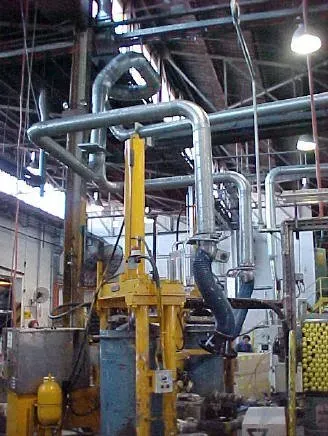
Often it is not, because capture only works close to the source. Air speed in front of an open hood falls away steeply with distance: in an OSHA worked example it drops to about a tenth of the duct speed one duct diameter from the opening and about a hundredth at two. A hood moved slightly back, or an extraction arm left parked away from the work, can capture very little.
Cross-draughts from doors, fans and moving machinery can also overpower the capture airflow, as can a process that has changed since installation, such as a faster machine, a different material or equipment moved to a new position.
Has the airflow dropped since the system was installed?
Usually it has, because resistance in the system builds up over time while the collector keeps running, so the drop is easy to miss. Common causes are:
- Filters load with dust, or become blinded when fine particles embed in the media, so the fan moves less air.
- A full dust bin or hopper can block discharge and load the filters faster.
- Leaks at duct joints, access doors, bin seals and airlocks draw in air that does no work at the hoods.
- Blockages, or blast gates and dampers left in the wrong position, can starve one branch while another takes the flow.
- Machines or branches added after installation share the same fan between more pickup points.
- Slipping fan belts, or the wrong fan rotation after electrical work, can reduce the airflow for the whole system.
Can fine dust get through the filters?
Yes, if the filters are damaged, poorly sealed or the wrong media for the dust, and the finest particles are the ones you cannot see. Safe Work Australia notes that respirable crystalline silica is invisible to the naked eye and stays airborne for long periods, so a clear-looking workshop is not proof of clean air.
A split filter, a poorly seated element or a worn gasket gives dust a path around the media. In a reverse pulse collector, compressed-air pulses clean the filters, so a failed pulse valve or poor air supply lets them load faster than they clean. Where cleaned air is returned to the room, any failure here sends dust straight back into the workplace.
Could settled dust be the problem?
It can be, because dust that has settled on surfaces returns to the air whenever something disturbs it, even when extraction is working well. Dry sweeping, blowing down with compressed air and emptying dust bins are common triggers.
Safe Work Australia lists dry sweeping, compressed air, high-pressure water cleaners and general-purpose vacuum cleaners not designed for hazardous dust as poor housekeeping methods, and recommends M or H-class industrial vacuum cleaners instead.
How do you find out why it is happening?
Work through capture, airflow and filtration in that order:
- Watch where the dust escapes, whether at the source, around the hood or at the collector outlet, using a smoke tube to show airflow direction if needed.
- Check the position of every hood and arm against the source, and note any process changes since installation.
- Compare the filter condition and the pressure drop across the filters with the system's normal readings.
- Inspect ducts, joints, doors, bin seals and gates for leaks, blockages and wrong settings.
- Measure the airflow at the hoods and compare it with the design figures.
- If the dust is hazardous, arrange air monitoring on a normal working day, as SafeWork NSW advises for silica work.
The last two steps need instruments and competency, so a qualified person is usually needed.
What to do if your extraction can no longer keep up
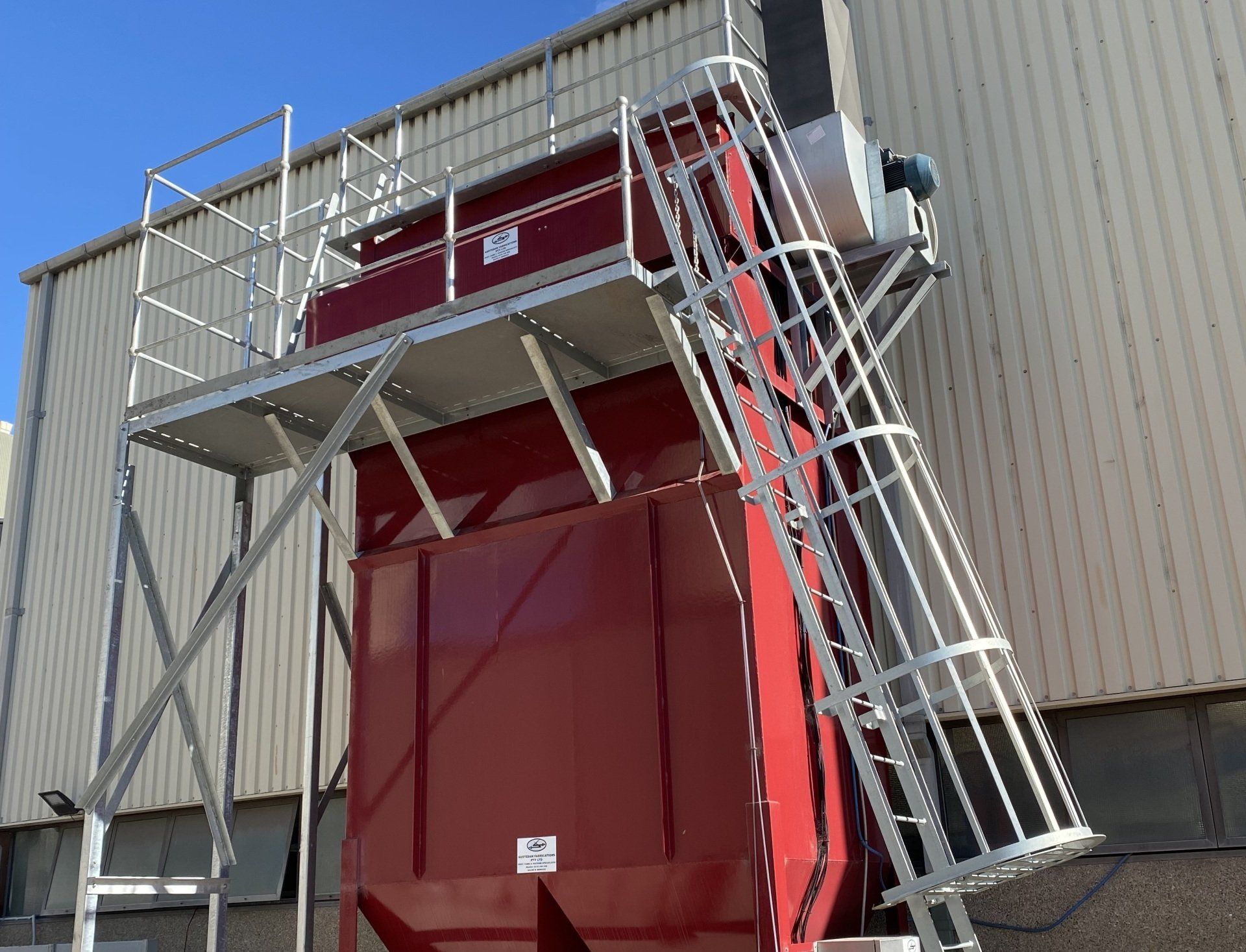
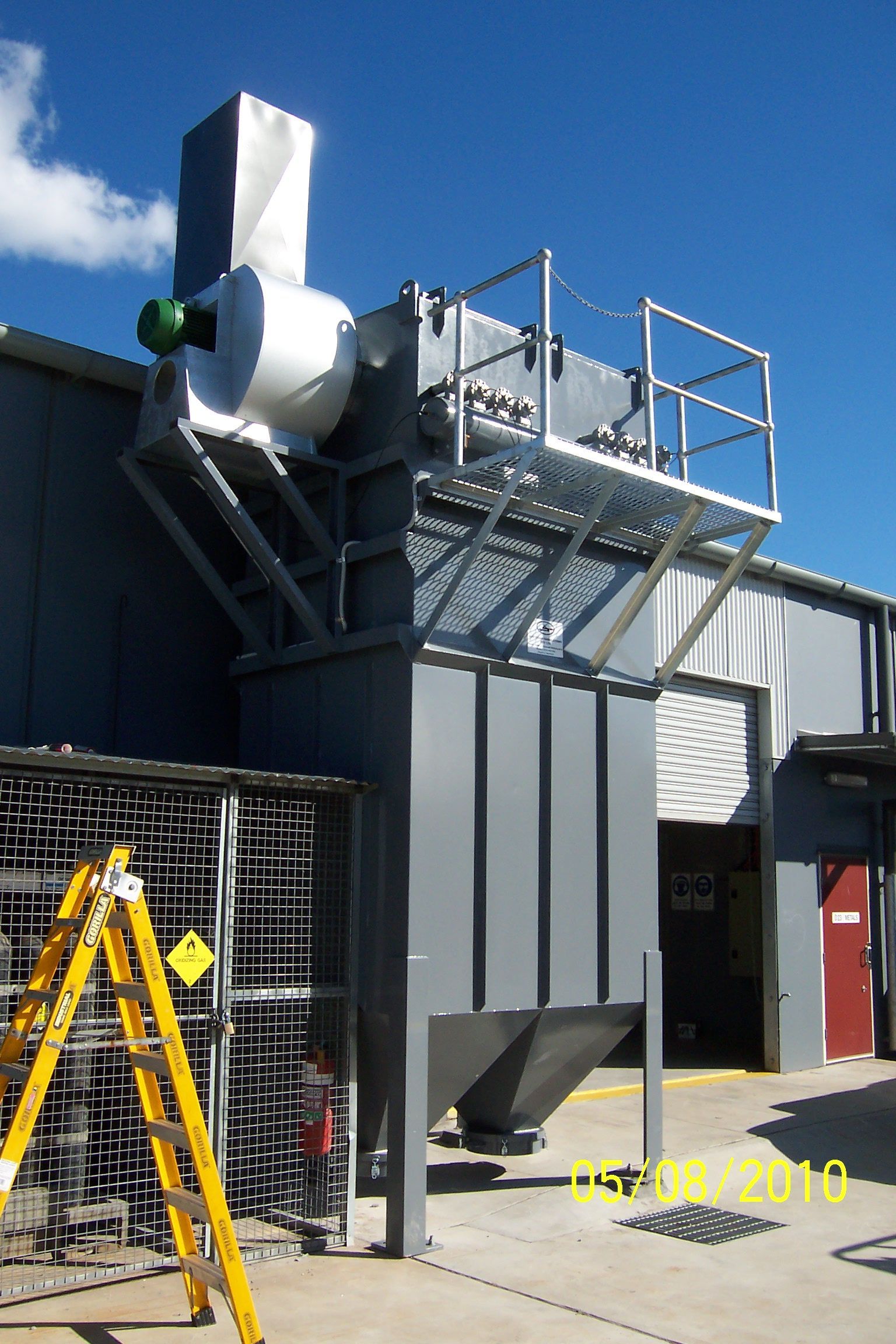
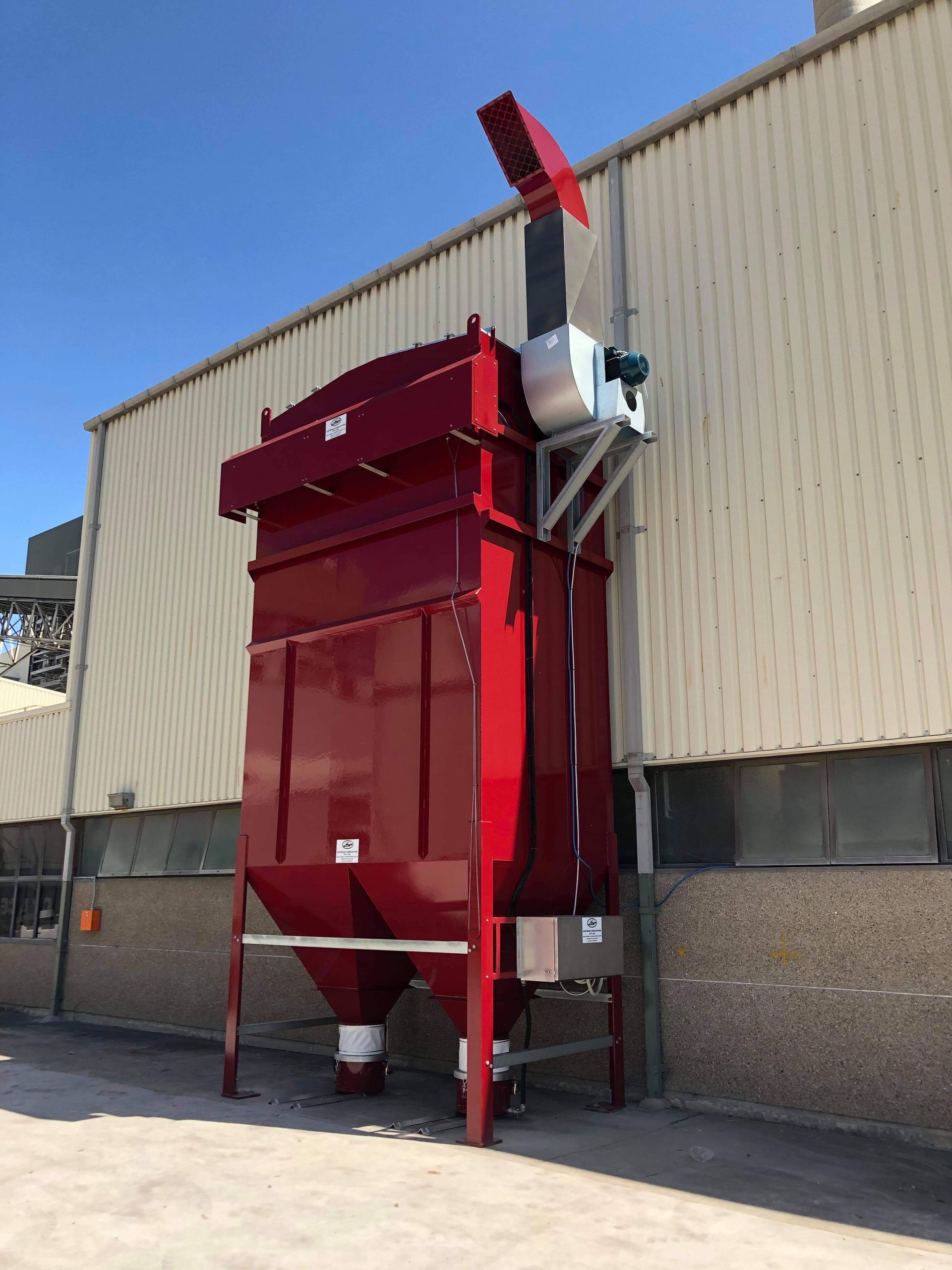
If the checks show the system is undersized, worn out or no longer suited to the process, the answer may be a system designed around the process as it runs today. Austedan Fabrications designs, installs and customises dust extraction systems from its factory in Cardiff, NSW.
To discuss your process and dust, speak with a specialist at Austedan.