Welding Fume Extraction for a Compliant Welding Bay
A compliant welding bay captures fume at the arc, draws it away from the welder at 0.5 m/s or more at the source, and sends cleaned air outside rather than back into the workroom, as Safe Work Australia's welding code sets out. The right welding fume extraction set-up depends on the process, the metals and the layout of the bay.
Key Takeaways
- Welding fume is a Group 1 carcinogen, so it must be controlled at the arc rather than diluted in the room.
- The exposure standard for welding fumes (not otherwise classified) was cut from 5 to 1 mg/m³ (8-hour average) in January 2024.
- Safe Work Australia's code sets a minimum capture velocity of 0.5 m/s at the fume source, moving away from the welder.
- Arms, backdraft or downdraft tables, portable units and on-gun extraction suit different work.
- Cleaned air should be discharged outside, and performance checked regularly.
What does a compliant welding bay have to meet?
Under work health and safety laws, a business must eliminate or minimise the risk of exposure so far as is reasonably practicable. Safe Work Australia's Welding processes Code of Practice explains how for welding, and our guide to welding fume extraction regulations in Australia covers the legal detail. The main benchmarks are:
- The International Agency for Research on Cancer (IARC) classified all welding fumes as Group 1 carcinogens in 2017.
- The exposure standard for welding fumes (not otherwise classified) was cut from 5 to 1 mg/m³ as an 8-hour time-weighted average in January 2024.
- The metals in the fume have their own exposure standards, so the figure for fume as a whole is not the only one to meet.
- Workplace exposure standards become workplace exposure limits from 1 December 2026.
- Natural dilution ventilation is for comfort only and does not count as an engineering control for fume.
Which extraction set-up suits your welding bay?
It depends on how the work moves and what is being welded.
| Set-up | Best suited to | Main trade-off |
|---|---|---|
| Extraction arm | Fixed or repeat work where the hood can sit close to the arc | Needs repositioning as the work changes |
| Downdraft or backdraft table | Small to medium parts welded at a bench | Tall parts and cross-draughts reduce capture |
| Portable unit | Temporary positions or varied locations | Airflow and filter capacity are limited by the unit's size |
| On-gun extraction | Processes where fume can be drawn at the torch | Suits only some processes and guns |
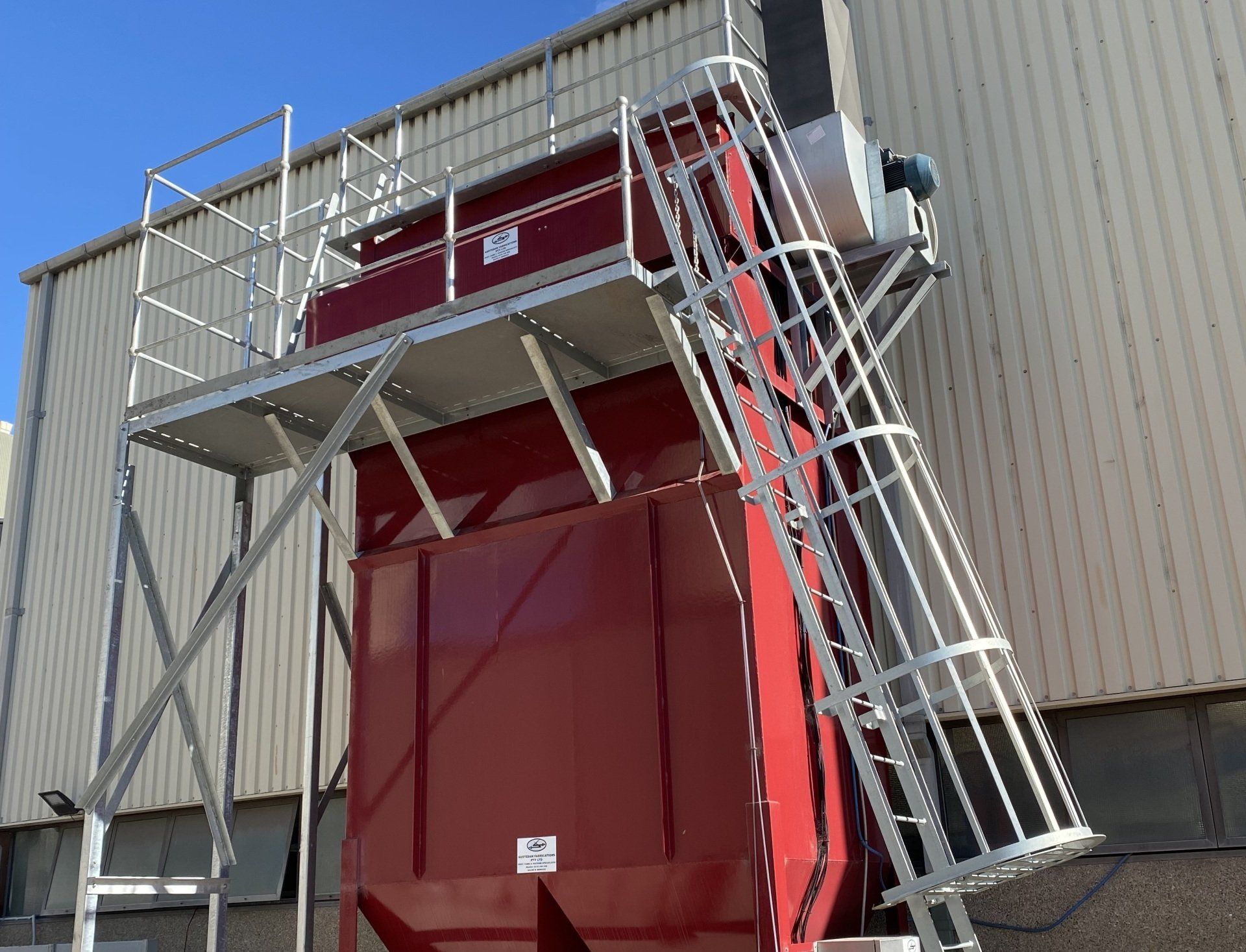
| Central system with hoods | Multi-station bays | Needs careful sizing and balancing of the ductwork |
How should the extraction be positioned and sized?
Position matters more than most people expect. Safe Work Australia's code says local extraction should provide a minimum capture velocity of 0.5 m/s at the fume source, drawing fume away from the welder. Air speed in front of an open hood falls away steeply with distance, so the hood needs to sit close to the arc and move as the weld moves.
Cross-draughts from doors, fans and moving machinery can pull fume out of the capture zone, so keep them away from the bay. The airflow a hood needs follows from the capture velocity, the hood size and its distance from the arc, and that figure sets the duct size and the capacity of the unit.
Where should the cleaned air go?
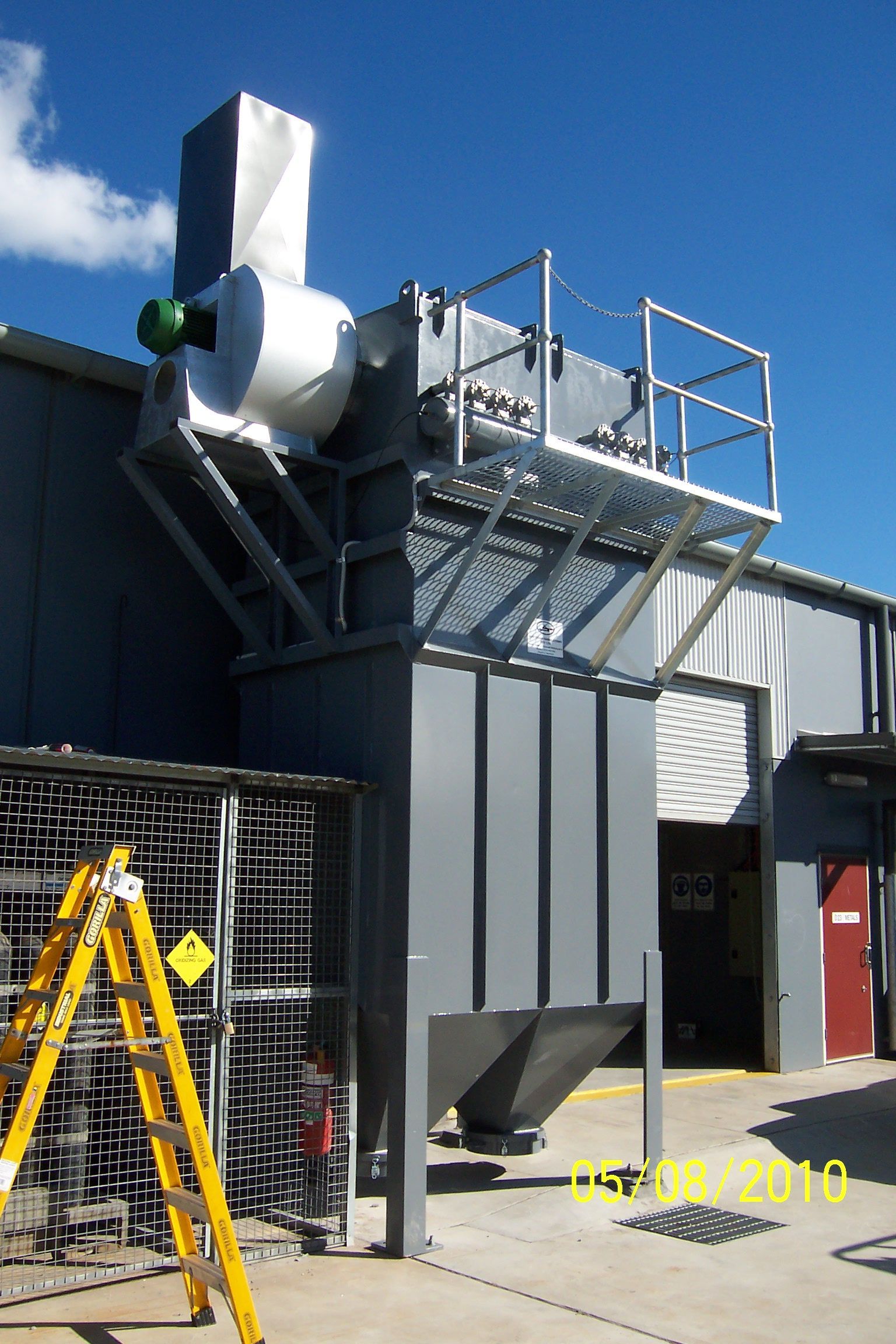
Outside the building. The code says air from local extraction should not be recirculated into the workroom, and should be discharged away from other work areas, air-conditioning inlets and compressors that supply breathing air.
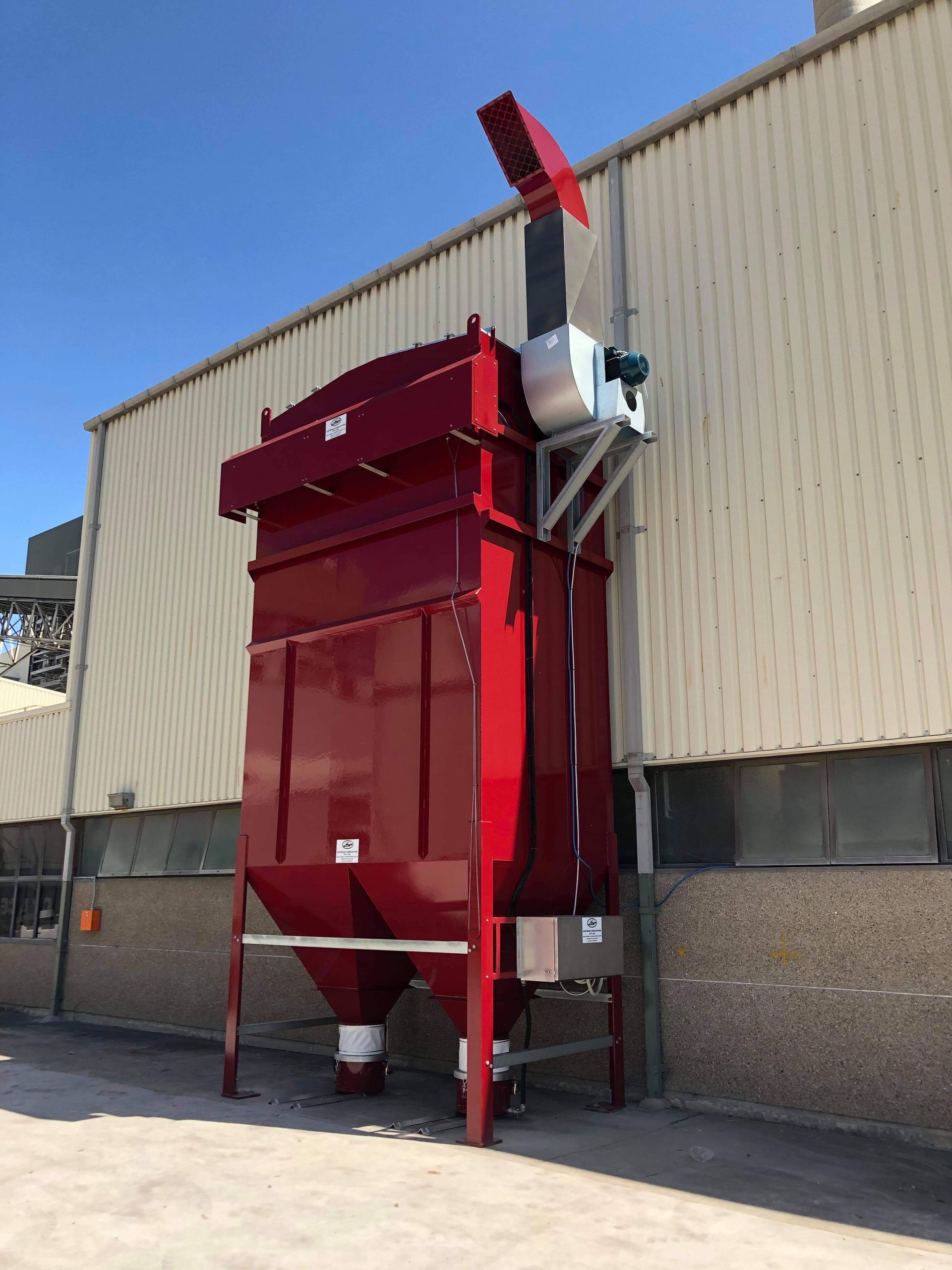
Plan the discharge route at the design stage, because it affects the ductwork and where the filter unit can sit. Welding fume is made of very fine particles, so filter selection matters, and hot sparks can ignite filters, so ask how the system protects against filter fires.
How do you keep the bay compliant over time?
Extraction performance drifts as filters load and ducts leak, so a system that passed at commissioning still needs checking. A practical routine is:
- Measure the airflow at each hood and compare it with the commissioning figure.
- Inspect arms, hoses, joints and filters for damage, leaks and blockages.
- Clean or replace filters on the supplier's schedule and keep a record of readings.
- Arrange air monitoring where you are not certain the airborne level is below the exposure standard, as WHS Regulation 50 requires.
Planning extraction for your welding bay
The right set-up comes from the welding process, the metals, the layout and how the bay will be used. Austedan Fabrications designs, installs and customises welding fume extraction from its factory in Cardiff, NSW.
To plan extraction around your welding work, request a quote.